

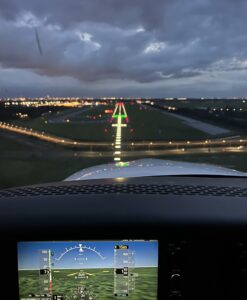
Approach Rotterdam Airport

The difference between CB-IR, IR, Complex, and High Performance

What are the differences and where can you find them in EASA regulations? Within European aviation regulations, the terms CB-IR, IR, complex aircraft, and high-performance aircraft are often used interchangeably. In practice, this leads to misunderstandings about authorizations, training requirements, and operational restrictions.

CB-IR versus IR: Under EASA Part-FCL, there is only one instrument rating for aircraft: the IR(A). The CB-IR (Competency Based Instrument Rating) is not a separate rating, but an alternative training pathway. Regardless of the pathway followed, the final result on the license is the same: IR(A).

The relevant CB-IR restriction: High Performance Aircraft
Although the rating is the same, when issuing an IR via the competency-based route, a restriction may be included:

“IR privileges not valid on High Performance Airplanes (HPA)”

This restriction means that the holder does have IFR privileges, but may not exercise them on single-pilot high-performance aircraft. The restriction can be removed later through additional training and a skill test or proficiency check on an SP-HPA.

What is a High Performance Aircraft (HPA)?


High Performance Aircraft is not a general definition in the Basic Regulation, nor is it a marketing term. Within EASA, HPA is defined in practice via the Class & Type Rating and License Endorsement List.

An HPA is typically:

  •  single-pilot certified
  • but comparable in performance and systems to multi-pilot aircraft

Examples of SP-HPA include:
Daher TBM series – Pilatus PC-12 – Piper M500 and M600 – Cirrus Vision Jet – Citation Mustang – Phenom 100

High-performance aircraft: Derived from Part-FCL and the EASA type rating list, it determines the additional training and authorizations a pilot requires and is directly relevant to CB-IR restrictions.

Single-Pilot High-Performance Airplanes (SP-HPA)
These are the aircraft most relevant to CB-IR/IR restrictions.

• Turboprops
• Jets (single-pilot certified)

For example, a Pilatus PC-12 or TBM is high-performance, but not complex. A King Air 200 is complex, but not a single-pilot high-performance aircraft.

What is a Complex Aircraft?

An aircraft is considered a complex motor-powered aircraft if it meets at least one of the following criteria:

  • a maximum take-off mass of more than 5,700 kg
  • more than 19 passenger seats 
  • certified for at least two pilots
  • powered by one or more turbojet engines
  • powered by more than one turboprop engine

This definition is laid down in Regulation (EU) 2018/1139, Article 3 (Definitions).

What does “complex” NOT mean?

  • High Performance Aircraft (HPA)
  • “Fast” or “difficult” aircraft
  • Retractable gear / variable pitch prop (old FAA term!)

See also Part FCL 600 et seq. 725A

This website is using cookies

We use them to give you the best experience. If you continue using our website, we’ll assume that you arre happy to receive all cookies on this website.